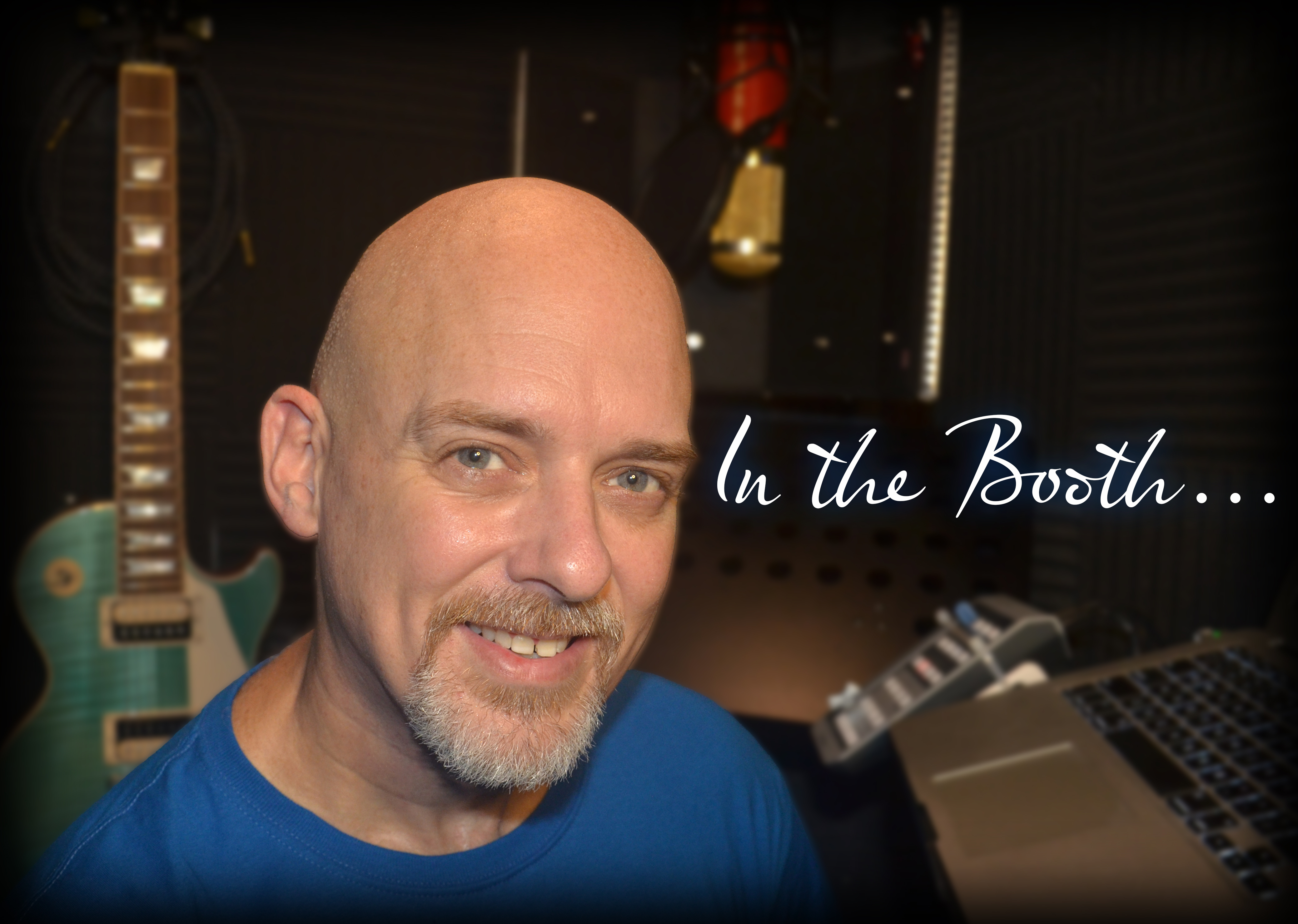
When I decided to focus my attention on acting and voice over, I quickly realized that I would need a place to record. Not only would I need a place where I could record without the environmental noises from the neighborhood, but I would need a place where I would feel free to yell, scream, cry or do whatever was necessary for my performance (whether that be a recording for voice over or preparing for an acting audition). Therefore, I decided to build a freestanding soundproof vocal booth with as few external pieces connecting to the internal pieces as I could manage. I am, by no means, an expert in soundproofing techniques. I did a lot of research on the internet and, as I did not really find anything that would really work for my situation, I came up with my own design. I hope you like the results.
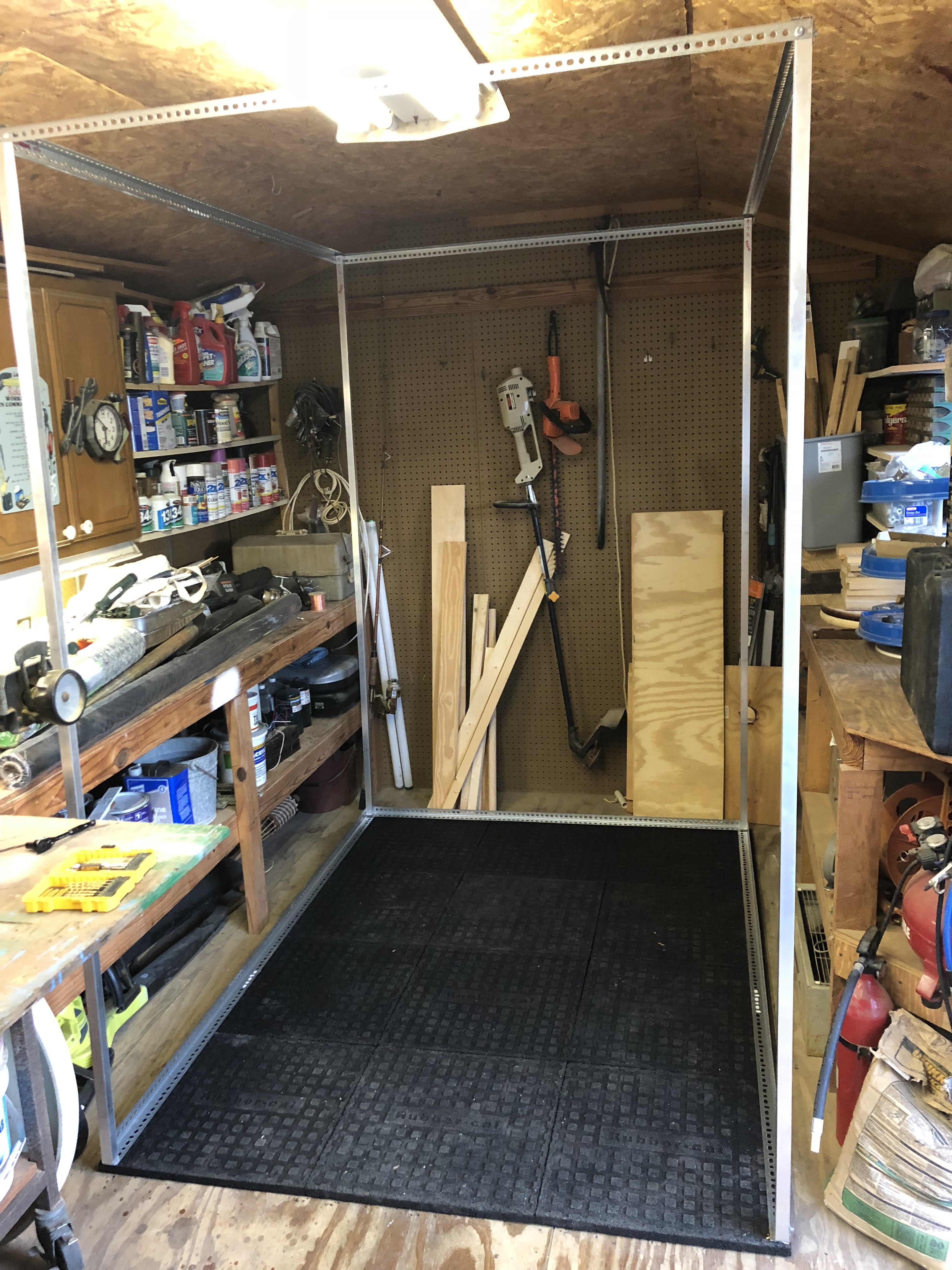
The first step was for me to eliminate the sound or vibration that would be transmitted through the floor, as the floor in the workshop is hollow underneath with only a sheet of plywood. I decided to get one-inch rubber tiles, which were made from recycled tires (the type of tiles that are used in weightlifting gyms). As this needed to be a freestanding booth and I did not have much room to spare, I used aluminum tubing and angle iron to start building the form on top of the rubber mats.
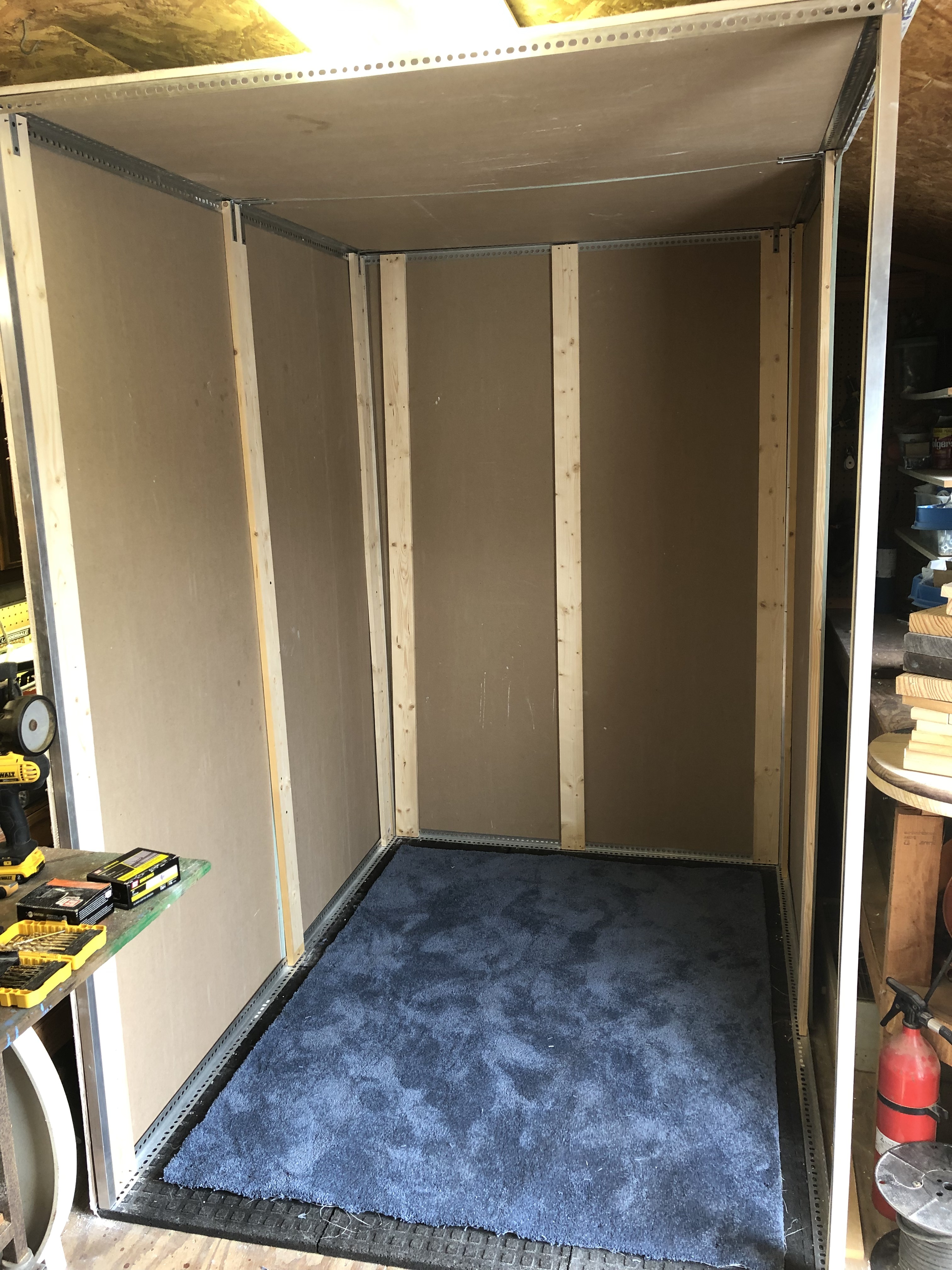
Secondly, I needed to start building more structural support and put the outside drywall in place (I would not be able to get to the outside of the booth after I started building the inside… due to the limited space in the workshop). Then, I cut a piece of carpeting for the next step.
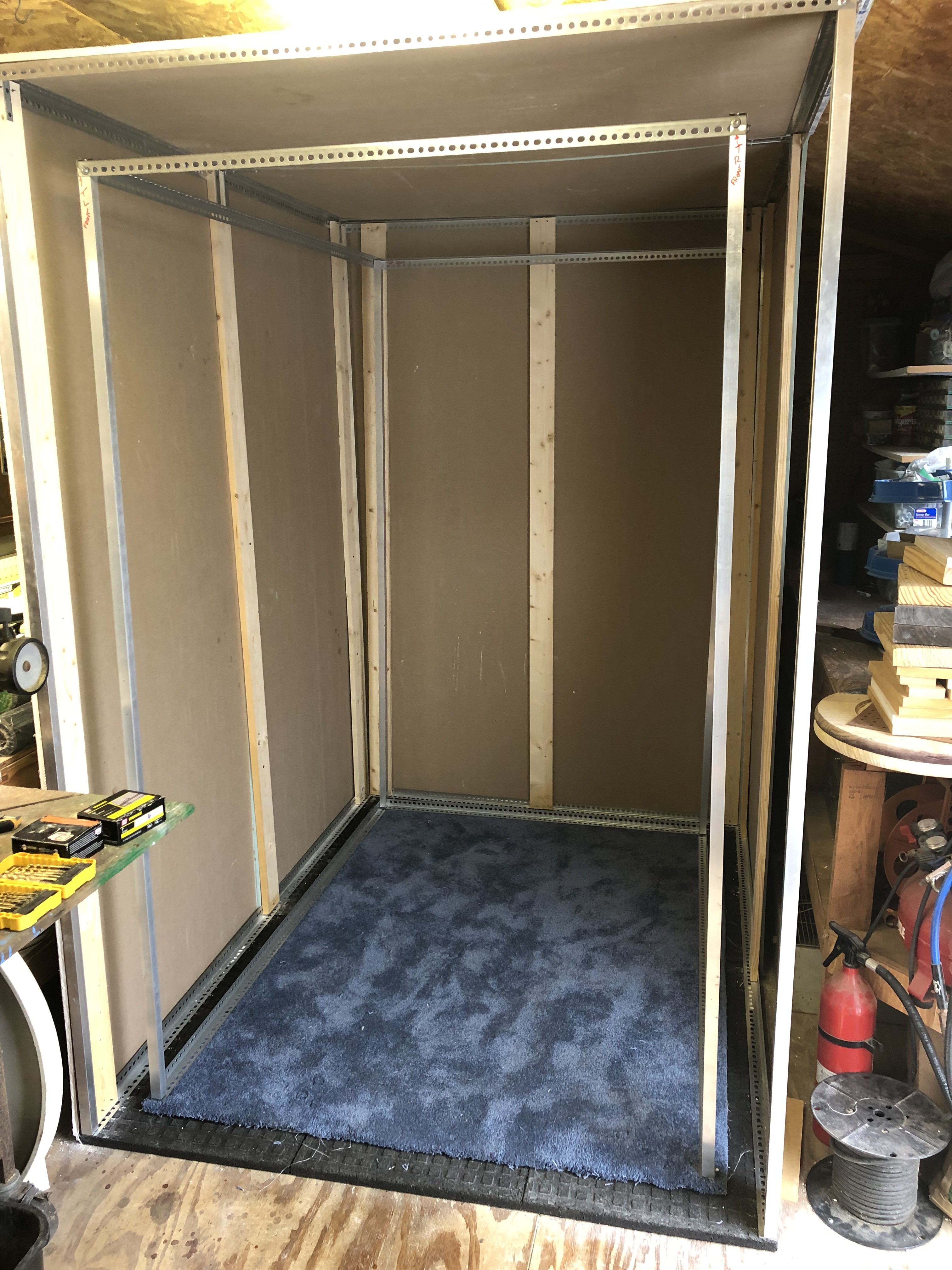
I wanted this booth to be isolated as much as possible with regard to sound, so I wanted to minimize any transmission of vibrations. Therefore, I decided to build a second, internal, freestanding box inside of the original box. I built it on top of the carpeting. This would mean that the internal box of this booth would not be sharing the same flooring as the external box. And, since both boxes are independently freestanding and not sharing any connection, it would be less likely for sound vibration to be transmitted to the inside.
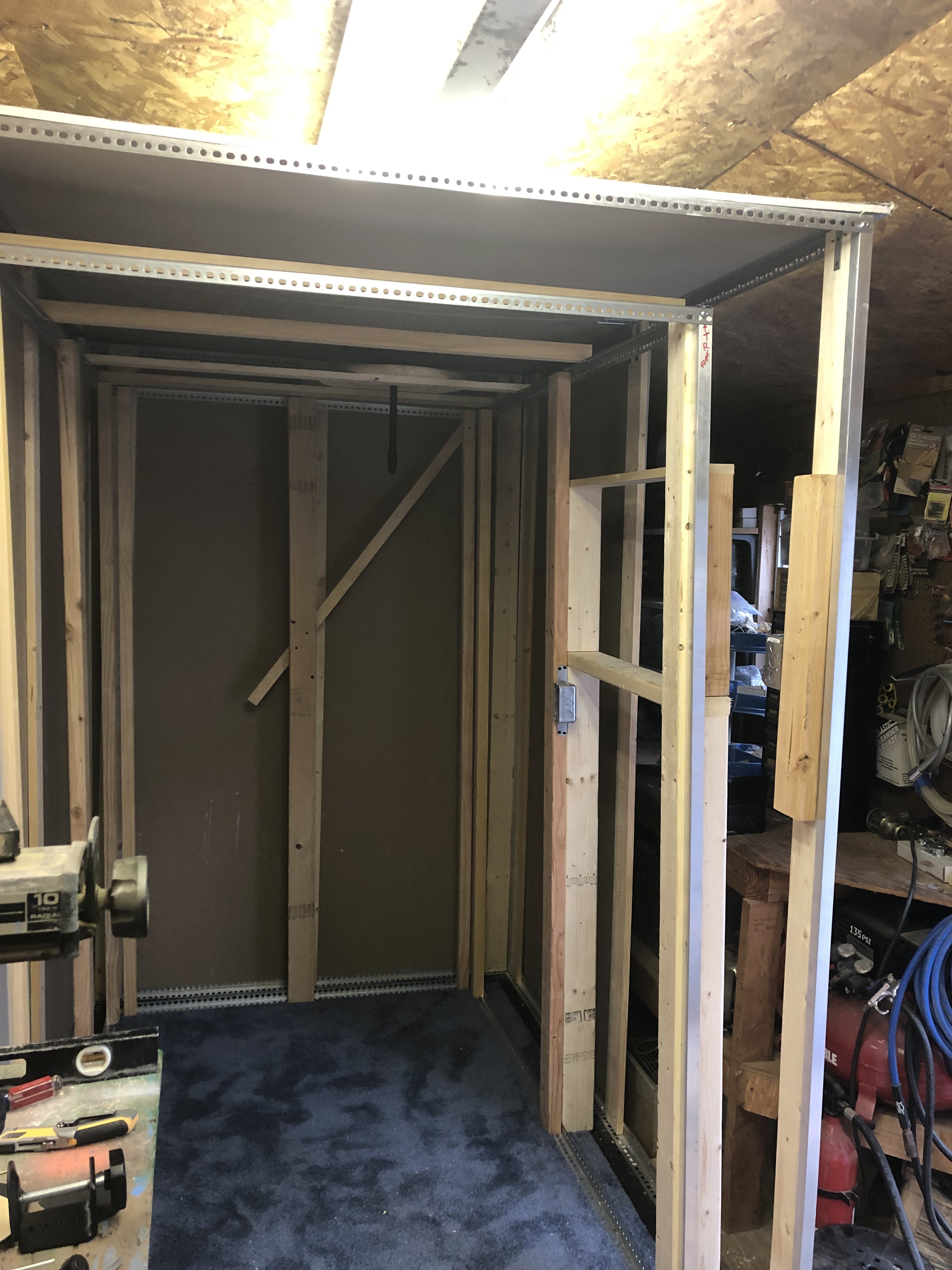
Here, I started to build the support structure for the internal box. As well, I started to build in the structure for the electrical outlet and the rackmount box for my electronic recording equipment.
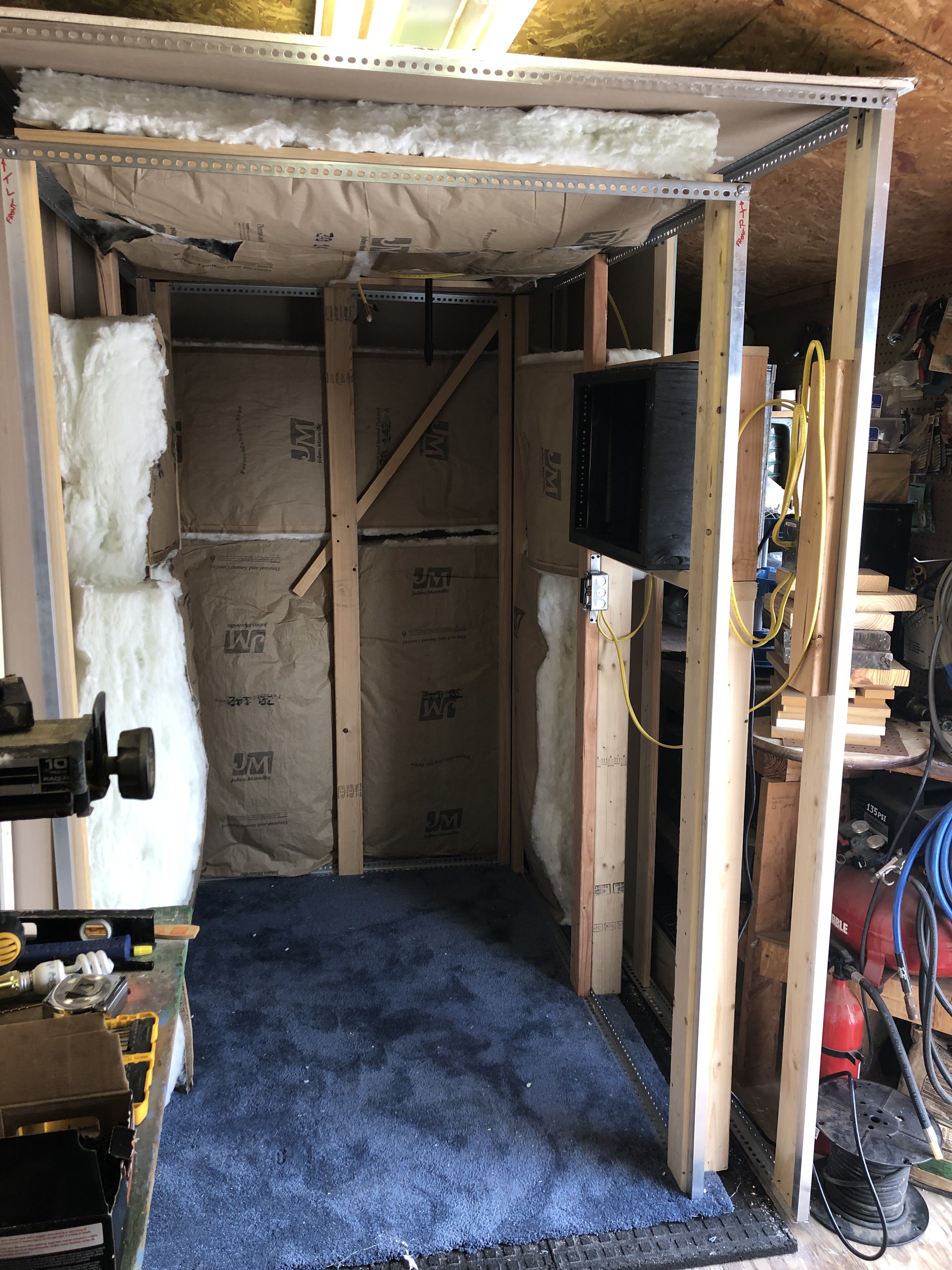
At this point, I have built and painted the box with rackmount rails mounted on the side. The rackmount box was designed to have an access panel that I can access from the outside of the vocal booth. This will allow me to connect and disconnect any devices I need, as the jacks and outlets for some of the rack-mountable electronics are on the backs of the devices. I have mounted the rackmount box into place and ran all of the electrical wiring. I ran the electrical so that I would have a cable with a male, three-prong plug extending out of the vocal booth (picture a heavy-duty outdoor extension cord). This allows me to disconnect power to the booth completely if there is a thunderstorm in the area. I installed an AC power outlet on the outside of the vocal booth and another inside the vocal booth. As well, I ran the wiring for a recessed LED ceiling light. Hopefully, this will not put out too much heat and give me plenty of light with less power consumption.
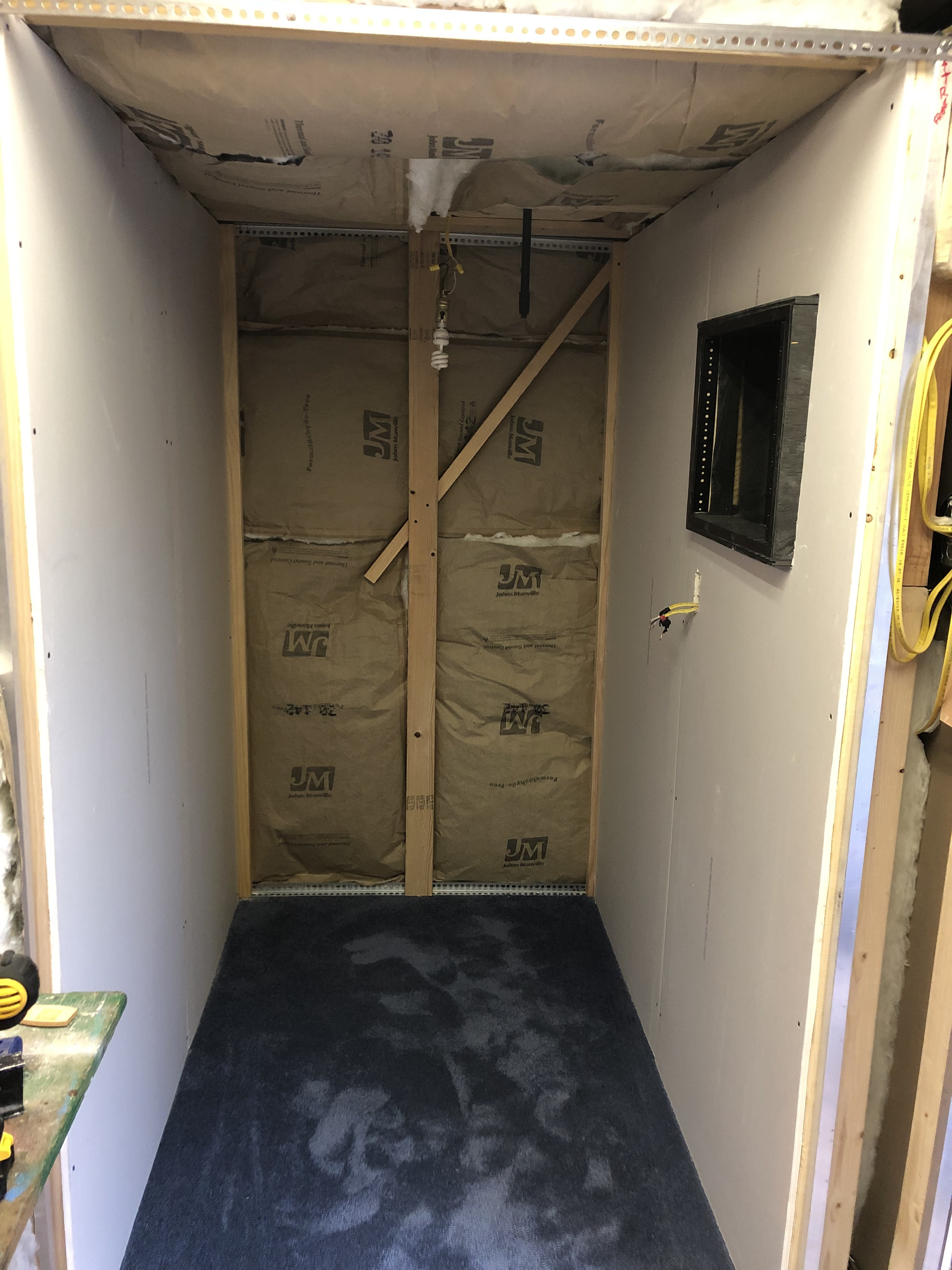
I put up insulation between the two freestanding boxes (around the walls and in the ceiling) to help insulate any environmental sounds from outside the booth. Then, I started to install the 1/2″ drywall on the inside of the internal box.
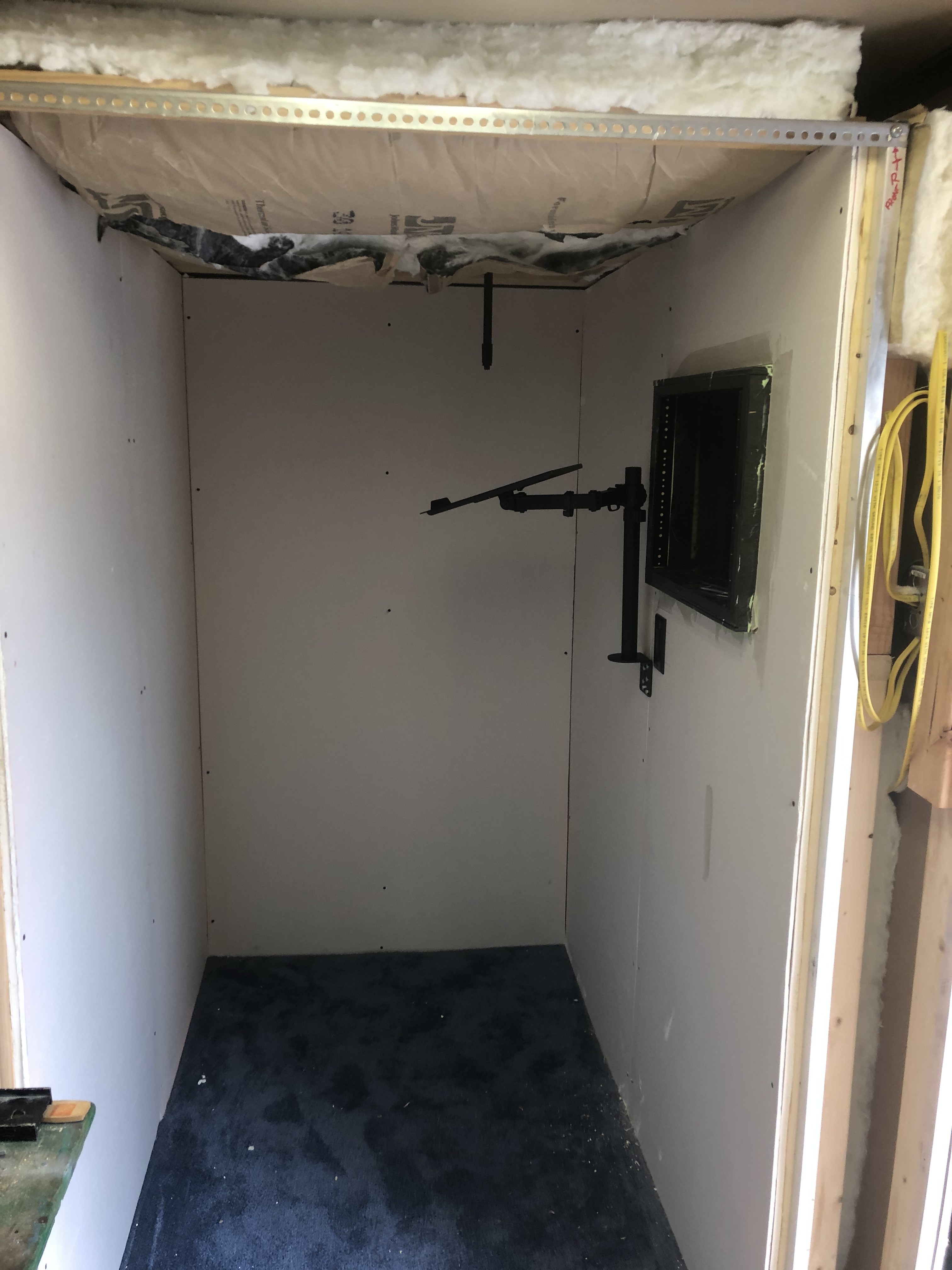
I used a special soundproofing glue on top of the 1/2″ drywall that I had installed. Then, I installed 1/4″ drywall on top of that. I know that most of this may sound like overkill, but I wanted to make sure that no noises from the neighborhood would make it through the walls and into my recordings (so far, so good). As well, I created a mount in the ceiling to which I connected a desktop microphone stand and I mounted to the wall a laptop mount with a moveable armature.
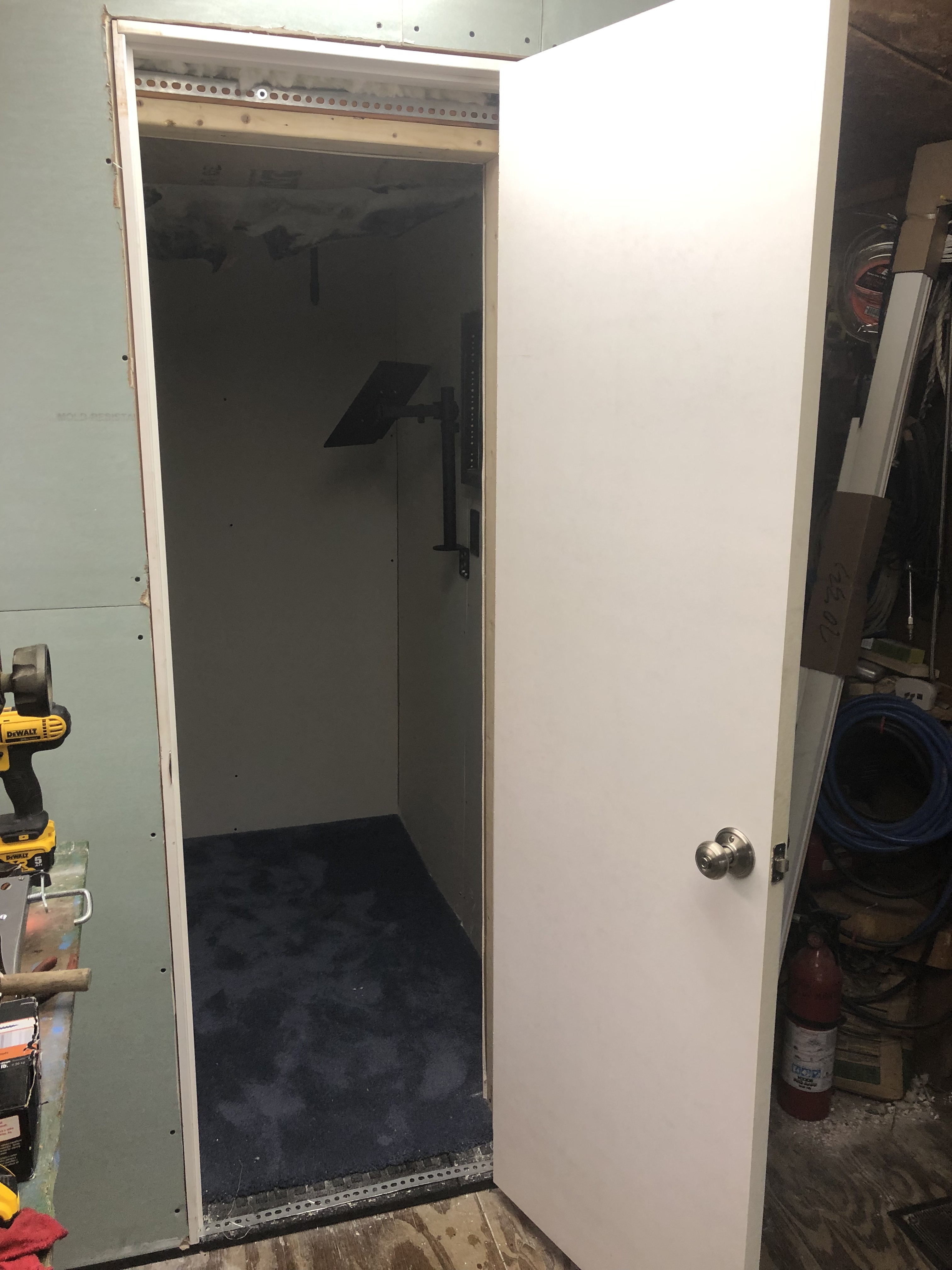
I had to wait to put in the ceiling drywall until I built the door and front of the internal and external boxes. Once I built that structure, I put the external drywall on the front of the external box. If you are wondering why I used green board (usually used for damp areas) for the external box, it is because I got it at 50% off as it was all damaged (it was all damaged in areas that I could work around and it saved me a ton of money).
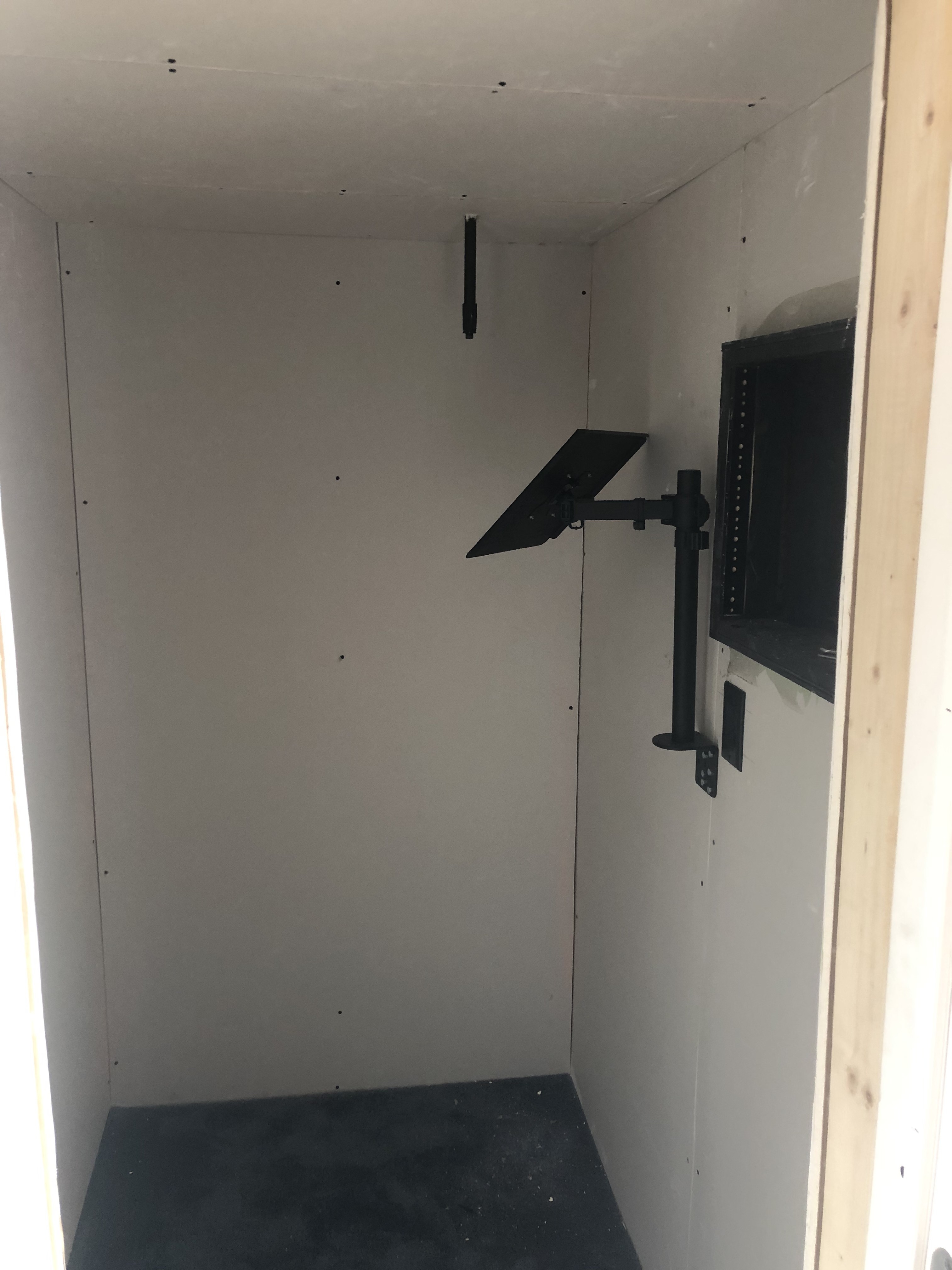
I installed both sheets of drywall (1/2″ and 1/4″) on the ceiling. The only thing left to do before cutting and gluing up the acoustic foam tiles is to cut the hole in the ceiling for the recessed LED light and wiring it.
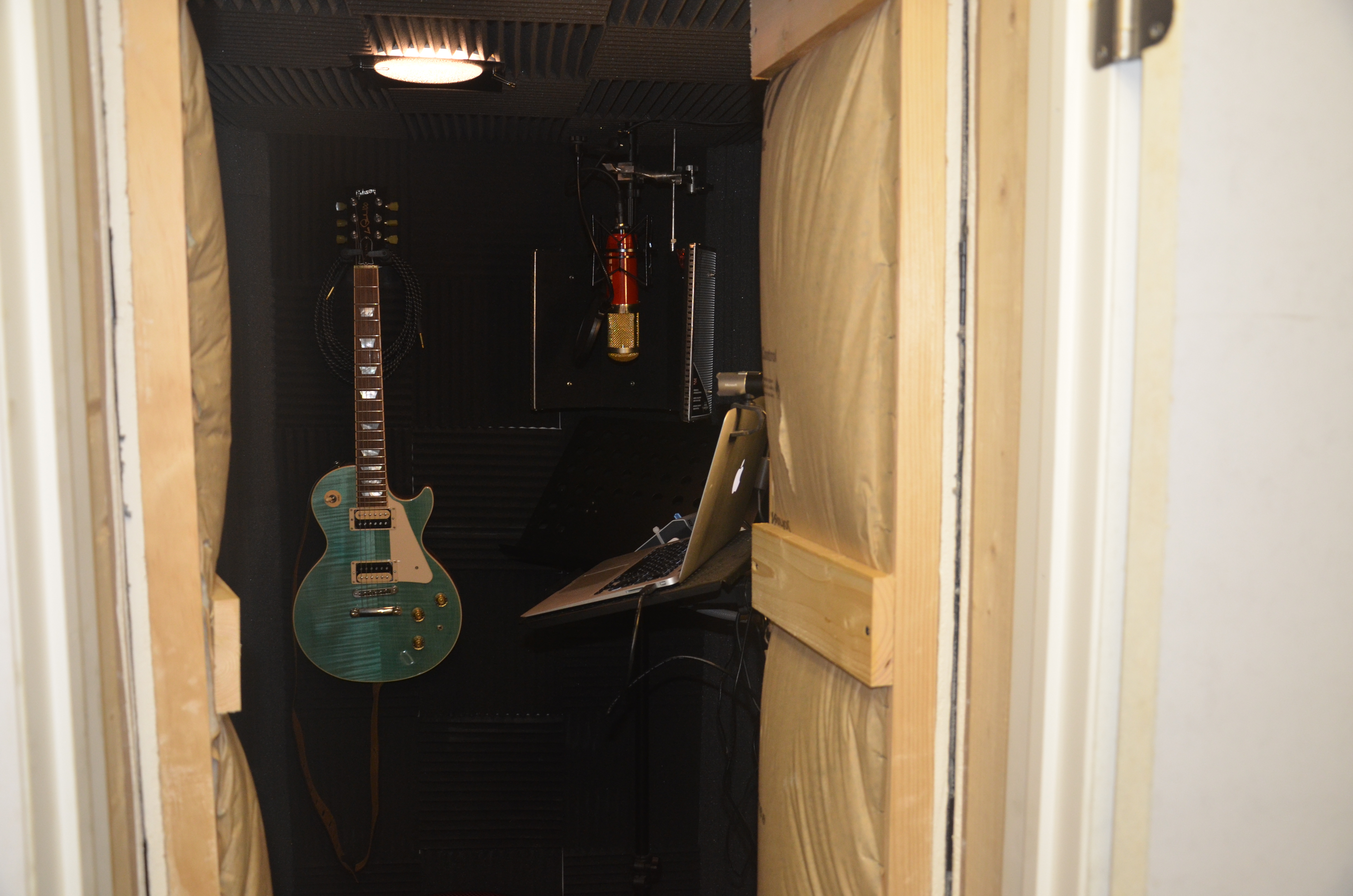
I built two half doors (so, they would not take up too much room opening inward) with insulation backing on the outer side and acoustic foam tiles on the inside for the internal box. This needed to be done, as the outer door on the external box was the weakest point (with regard to soundproofing) in this soundproof vocal booth. I installed the bass trap foam in all of the corners and cut all of the 1″ deep acoustic foam tiles to the required dimensions and glued them to the 1/4″ drywall. After this was all completed, I placed a portable radio inside of my new soundproof vocal booth and turned the volume up as high as it would go. I closed the inner and outer doors and stood right in front of the booth. I had to strain to make out the sound of the radio.
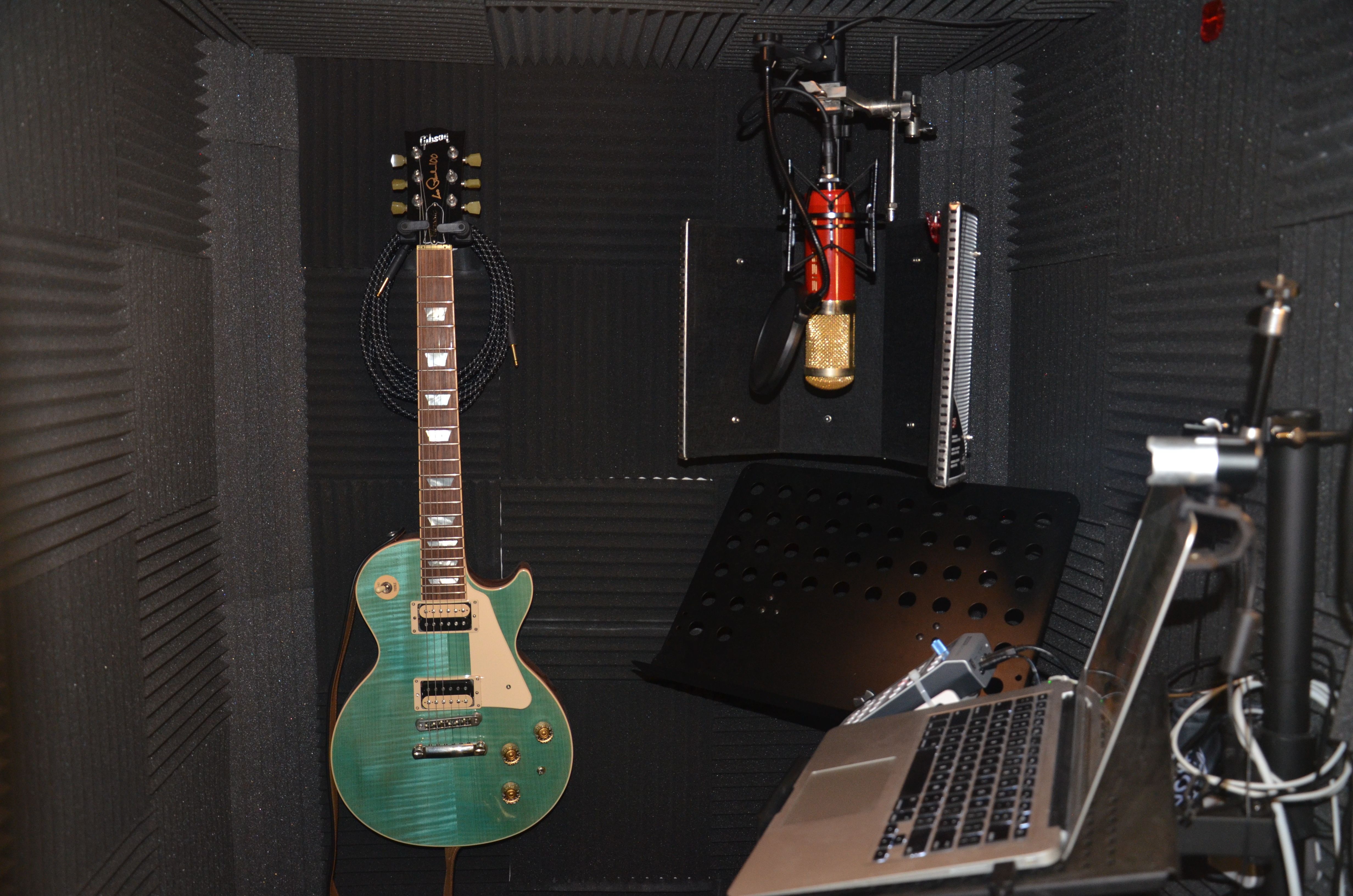
I installed a guitar wall mount and hung my guitar. As well. I installed my microphone with pop filter, my laptop, music stand and faderport. Then, I ran all of the cabling and secured that cabling neatly along the walls of the booth.
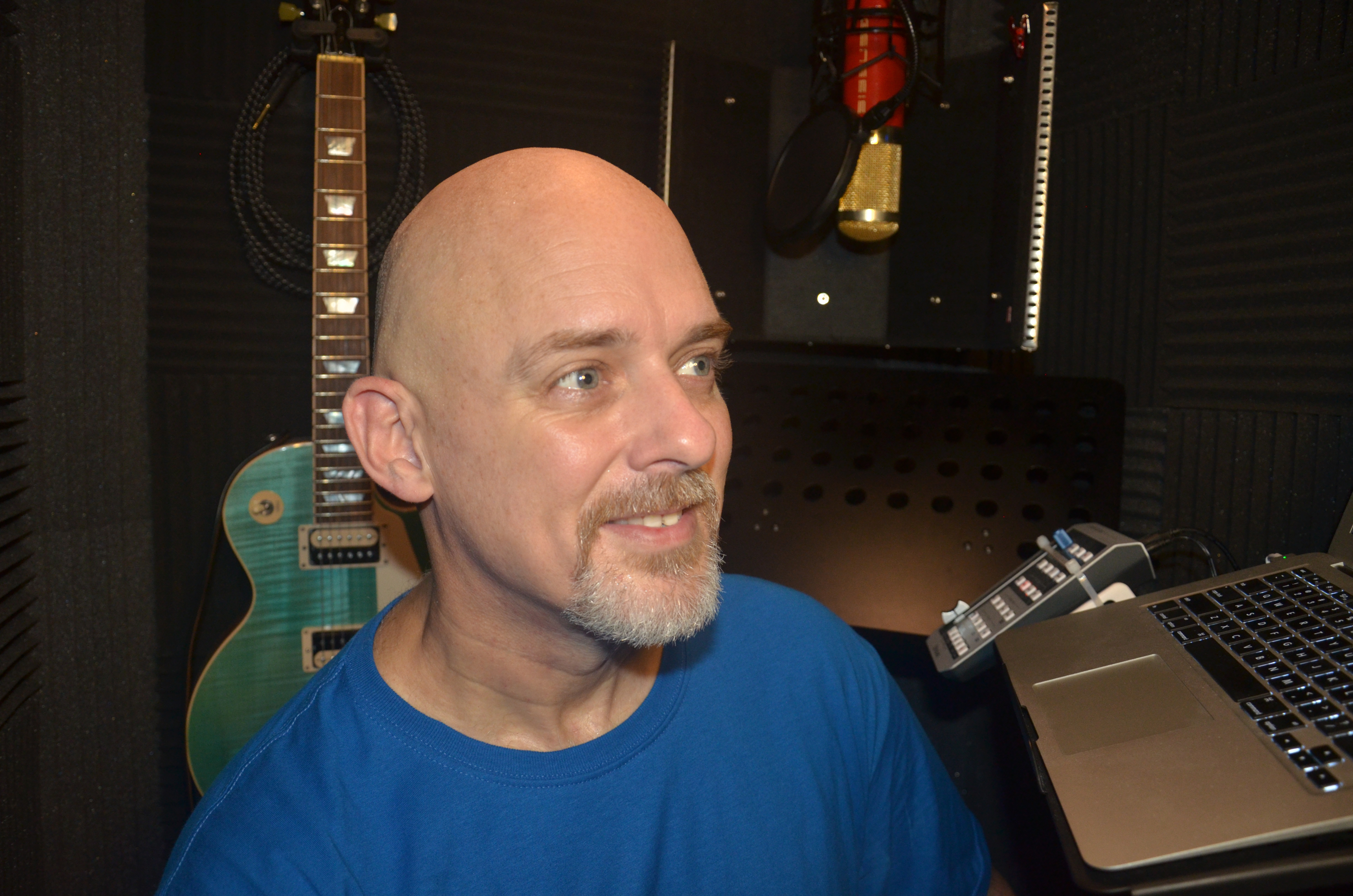
Enjoying the fruits of my labor.
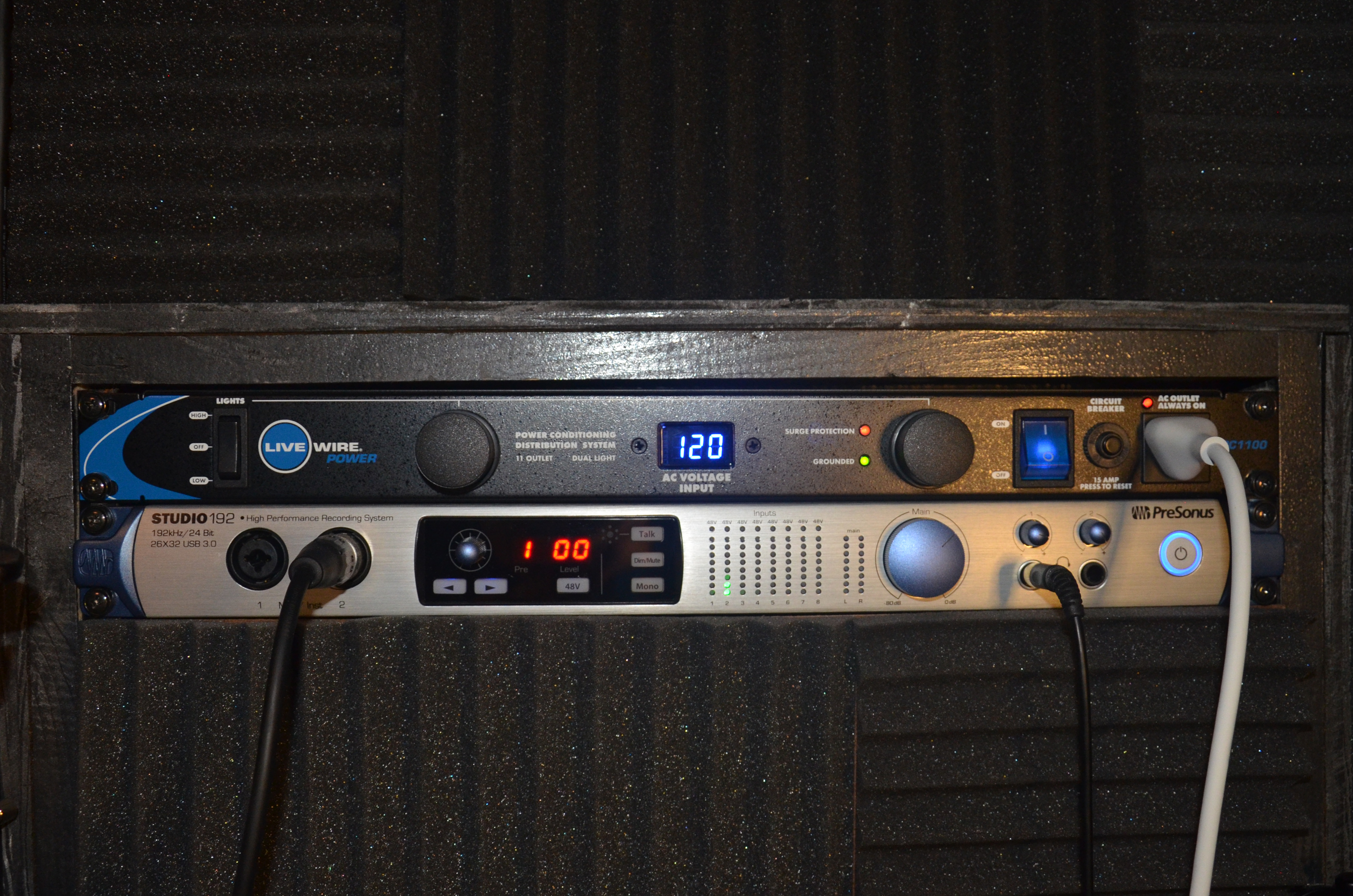
My power conditioner and my audio interface.